Home Equity
How to Wipe Out Card Debt Without Refinancing
 Toni Taylor Gazza · NMLS #274323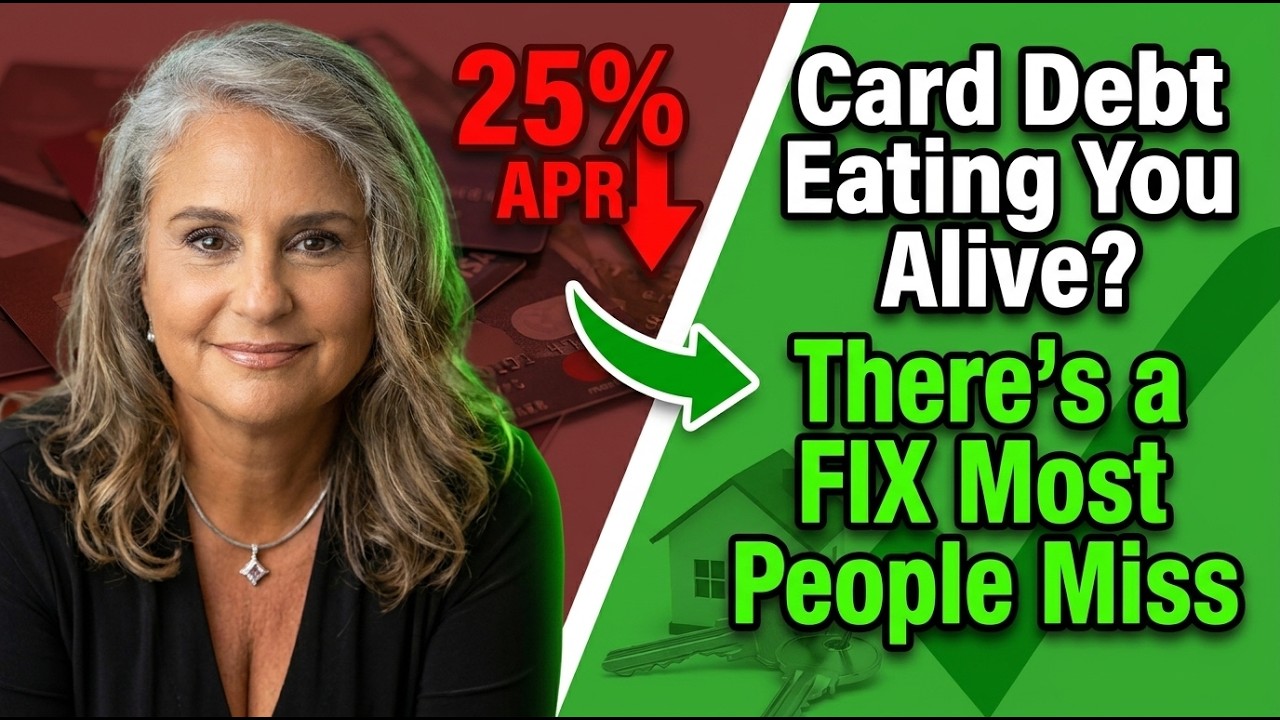
How can I pay off credit card debt without refinancing my low-rate mortgage?
You can use a home equity line of credit (HELOC), which is a second loan that sits behind your first mortgage. It lets you borrow against your equity to pay off high-interest credit cards while your first mortgage rate and payment stay exactly the same. Self-employed borrowers may qualify using bank statements instead of tax returns.
How do I pay off credit card debt without refinancing my low-rate mortgage?
You can use a home equity line of credit (HELOC), which is a second loan that sits behind your first mortgage. It lets you borrow against the equity you have already built to pay off high-interest credit cards. Your first mortgage rate and payment stay exactly the same. Self-employed borrowers may even qualify using bank statements instead of tax returns.
Why are your credit cards costing more than your house?
Some people pay more in credit card interest every month than they pay on their entire mortgage. And they are sitting on the exact thing that could stop it, but they will not touch it. Because they are scared of losing a mortgage rate in the 3s or 4s.
Here is what I see over and over. Someone locked in a nice low first mortgage years ago, a rate they will never get again, and they know it. On the other side of the ledger, they have twenty, thirty, or forty thousand dollars spread across credit cards charging 15 to 30 percent. The minimum payments alone are eating the paycheck alive.
Nationally, credit card rates have been sitting around 25 percent on average, and plenty of cards run higher. You can track current averages through the Federal Reserve's consumer credit data.
Why do people keep paying 25% to protect a 3%?
The behavior is almost always the same. Someone knows the card debt is crushing them. They know consolidating could roll it all into one lower payment. But they freeze. Because in their head, fixing the cards means giving up that beautiful first mortgage rate. So they choose the rate. And they keep paying 25 percent to protect a 3.
I understand why. That low rate feels like the one financial win they got, and protecting it feels smart. But look at what that instinct actually costs.
If you owe thirty thousand on cards at 25 percent, that is roughly seven thousand five hundred dollars a year in interest. Not principal. Just interest. Money that vanishes. Meanwhile, the rate you are guarding might be saving you a small fraction of that. You are guarding the small win and bleeding out on the big one.
What is a HELOC and how does it protect your first mortgage?
Here is the part most people never got told. You do not have to touch your first mortgage to fix this.
A home equity line of credit, or HELOC, is a second loan that sits behind your first mortgage and lets you borrow against your equity. Equity is just the difference between what your home is worth and what you still owe on it.
Your first mortgage stays exactly where it is. Same rate. Same payment. Untouched. The HELOC is a separate line on top of it, and you use that line to wipe out the cards. The Consumer Financial Protection Bureau explains how HELOCs work and what to watch for.
So picture the numbers again. Thirty thousand in cards at 25 percent, gone. Rolled onto a line secured by your home, which almost always carries a far lower rate than any credit card. Your first mortgage never moved. You protected the 3 and killed the 25 at the same time. That is the move people miss because they think it is all or nothing.
Who is this strategy for and who is it not for?
Let me be straight. This is for a homeowner with real equity and expensive card balances they want to consolidate.
If you have almost no equity, or your card balances are small, this may not be your answer. I would rather talk you out of a loan you do not need than put you in one. Before borrowing against your home, it helps to understand the risk, since your house is the collateral. The CFPB has a plain-English guide on what to know before taking out a home equity loan or line of credit.
Can self-employed borrowers qualify without tax returns?
This is the part I most want you to hear. A lot of the people bleeding on card debt are self-employed. Business owners. Contractors. Folks who write things off and show less income on paper than they actually earn.
They assume that shuts the door, because the traditional way to qualify is to hand over tax returns that prove your income.
Here is what a lot of people have no idea exists. There are home equity options that do not run on your tax returns at all. Some look at your bank statements instead, at what actually lands in your accounts month to month. Others, for certain borrowers, lean on the equity and the property itself rather than a stack of income documents.
This lives in the non-QM world, which just means loans that do not fit the strict government box but are very real and very available. The rules that separate qualified mortgages from other loans come from the CFPB's Ability-to-Repay and Qualified Mortgage standards. So the contractor who nets plenty but shows little on his return often has a path he never knew was there.
What actually decides whether this works for you?
The real question is not whether to protect your low rate. You can protect it. The real question is what your specific numbers say.
How much equity you have. What you owe on the cards. How your income documents. That is the whole ballgame, and it is different for every person.
I ran the underwriting side of the business, so I know what these lenders actually need to say yes. And because we are an independent broker, we shop many lenders instead of forcing you into one product. That matters a lot here, because the right structure depends entirely on your equity, your balances, and how your income shows up.
Ready to run your actual numbers?
If any of this sounds like you, book an appointment here and let us run your actual numbers together. No pressure and no pitch. Just a clear look at whether this works for you.
This article is for educational purposes only and is not a commitment to lend or an offer of credit. Rates, terms, and program availability vary and are subject to change.
Frequently asked questions
Will a HELOC change my first mortgage rate? +
No. A HELOC is a separate second loan that sits behind your first mortgage. Your first mortgage rate, term, and monthly payment stay exactly the same. You keep the low rate you locked in years ago and use the new line of credit to pay off your high-interest credit cards. This is the whole point of the strategy, and it is why so many homeowners with low first mortgages can still tackle expensive card debt without giving anything up.
How much can I save by consolidating cards with a HELOC? +
It depends on your balances and the difference in interest rates. If you owe thirty thousand dollars on cards at 25 percent, that is roughly seven thousand five hundred dollars a year in interest alone. A line secured by your home almost always carries a far lower rate than any credit card, so the interest you pay drops significantly. The exact savings depend on your equity, your balances, and the terms you qualify for, which is why running your specific numbers matters.
Can I get home equity financing without tax returns? +
Yes, in many cases. Some home equity options review your bank statements instead of tax returns to see what actually lands in your accounts each month. Others, for certain borrowers, lean more on your equity and the property itself. These live in the non-QM space, meaning loans that fall outside the strict government box but are very real and available. This is especially helpful for self-employed borrowers, contractors, and business owners who show less income on paper than they truly earn.
Who should not use a HELOC to pay off credit cards? +
If you have almost no equity in your home, or your credit card balances are small, a HELOC may not be your best answer. Because a HELOC is secured by your home, it works best when you have real equity and expensive balances worth consolidating. A good broker will tell you plainly if this does not fit your situation rather than push you into a loan you do not need. The right move always depends on your specific numbers.
What is the difference between a HELOC and refinancing? +
Refinancing replaces your existing first mortgage with a new one, which means you could lose a low rate you locked in years ago. A HELOC does not touch your first mortgage at all. It is a separate line of credit that sits on top of your existing loan. For homeowners guarding a rate in the 3s or 4s, a HELOC lets you fix the card debt while protecting the mortgage rate you never want to give up.
How does an independent broker help with this? +
An independent broker shops many lenders instead of offering just one product. That flexibility matters on home equity financing, because the right structure depends entirely on your equity, your card balances, and how your income documents. Some borrowers fit a standard HELOC, while self-employed borrowers may need a bank statement or non-QM option. Working with someone who knows the underwriting side means matching you to the lender most likely to say yes on terms that actually make sense for you.
Sources
- What is a home equity line of credit (HELOC)? — Consumer Financial Protection Bureau
- Consumer Credit - G.19 Release — Federal Reserve
- Ability-to-Repay and Qualified Mortgage Standards — Consumer Financial Protection Bureau
- Mortgages: Answers to common questions — Consumer Financial Protection Bureau
About the author
Toni Taylor Gazza — Founder & Mortgage Expert
NMLS #274323
Toni Taylor Gozza has spent her entire career — since 1990 — inside the mortgage business, and she's worked every channel of it: consumer finance, banks, wholesale lending, and mortgage brokering. She was one of the youngest people ever promoted into management at her company at age 21, and one of the very few people in the country to serve as a wholesale account executive with actual signing underwriting authority. Running an entire wholesale mortgage company gave Toni rare insight into what secondary markets and investors need to package and approve a loan. That underwriting-level understanding is exactly why she and her team can find a path for borrowers other lenders turn away, especially in the Non-QM space. Toni leads Interconnect Mortgage as an educator first. She won't sell you into a loan you don't need — she'll explain your options in plain English so you can decide for yourself. A Palm Beach County resident since 1992, she's active with the Junior League and the Couture Club, a local organization supporting children's foundations.
Ready to talk numbers?
Schedule a 15-minute call. We'll walk through your situation and show you what's actually possible — no pressure, no pitch.
Book a call

