Reverse Mortgage / Aging in Place
Reverse Mortgage Calculators: What They Don’t Tell You (and What You Really Need to Know)
How accurate are reverse mortgage calculators?
Reverse mortgage calculators give estimates only, based on your age, home value, and mortgage balance. They usually miss the details that decide your actual numbers: interest rates that change daily, closing costs and FHA insurance that vary by state and lender, non-borrowing spouse rules, property type, and whether you want a lump sum, monthly payout, or line of credit. That's why the same inputs can produce totally different answers on different sites — treat the calculator as a starting point, not the finish line.
Custom HTML/CSS/JAVASCRIPT
Why everyone Googles it
If you typed “reverse mortgage calculator,” you’re not alone. Adult children and seniors alike want to know:
👉 “How much money can I get from my home without making a payment?”
And sure, online calculators will spit out a number. But here’s the thing: those numbers are estimates only. They often leave out the most important details that decide whether a reverse mortgage is a fit for your family.
What most calculators show
A typical reverse mortgage calculator asks for:
- Your age (or youngest borrower’s age)
- Your home’s value
- Your current mortgage balance
From there, it’ll give you a ballpark figure of “available funds.”
What calculators usually miss
Here’s what most websites don’t tell you:
- Interest rates change daily, and calculators rarely keep up.
- Closing costs & FHA insurance can vary depending on state and lender.
- Non-borrowing spouse rules can impact eligibility.
- Property type (condo, manufactured home, multi-unit) changes the numbers.
- Your goals matter — whether you want a lump sum, monthly payout, or line of credit affects what’s available.
That’s why two people can put the same info into different calculators and get totally different answers.
Why a conversation beats a calculator
A calculator can show numbers… but it can’t show a plan.
- It won’t tell you if using home equity will disqualify mom from Medicaid later.
- It won’t explain how a reverse mortgage can cover in-home care without draining savings.
- It won’t warn you if selling in a few years makes more sense than borrowing now.
That’s where working with a reverse mortgage specialist (and your financial/elder law team) matters. We can run the numbers, but more importantly — we connect them to your family’s actual situation.
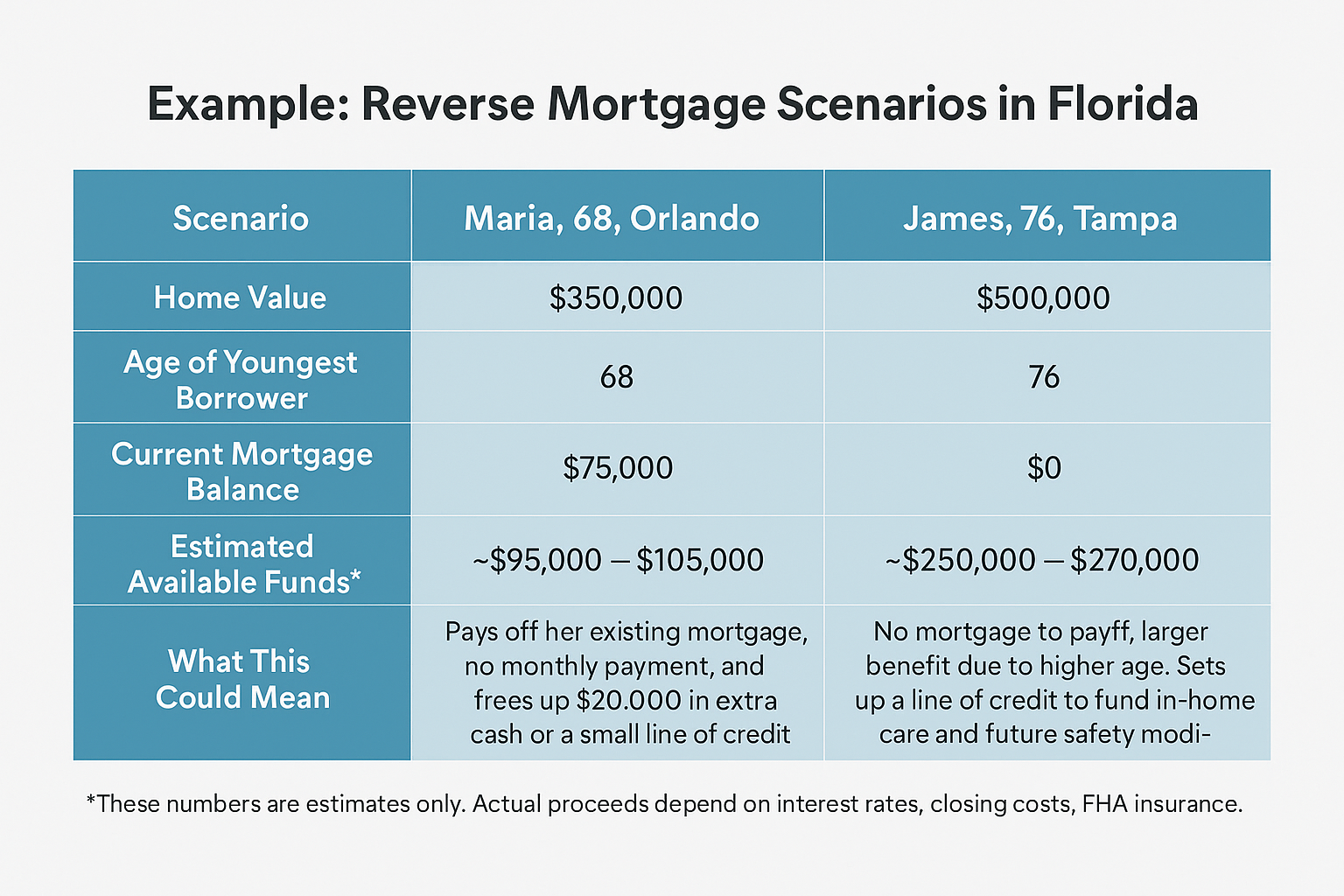
Disclaimer: These examples are for illustration only and do not represent an actual loan offer. Loan proceeds vary by borrower age, interest rates, property value, loan balance, and program rules. All loans are subject to credit approval and program guidelines. Reverse mortgage borrowers must pay property taxes, homeowners insurance, and maintain the home.
👉 Takeaway: In Florida, a reverse mortgage can look very different depending on age, equity, and goals. A younger borrower with an existing loan may free up modest monthly cash flow, while an older borrower with a paid-off home could set up a large line of credit for future care.
A quick story
Janet searched for a calculator because she wanted to know if her dad could afford to bring in part-time care. The calculator told her “about $150,000 available.” But when she called, she learned:
- Dad’s age qualified him for even more
- His condo carried slightly higher insurance costs
- He could pay off his existing mortgage and still set up a line of credit for care
The “calculator answer” wasn’t wrong — but it was incomplete. The full conversation gave Janet peace of mind.
The bottom line
Reverse mortgage calculators are a starting point, not the finish line. If you want numbers, we can run them. If you want peace of mind, we’ll connect those numbers to your family’s goals.
👉 Book a free 15-minute fit call: /book
Interconnect Mortgage, a DBA of Palm Beach Mortgage Group Inc., NMLS 373094
Check licensing at NMLS Consumer Access
Disclaimer: Online reverse mortgage calculators provide estimates only and do not reflect actual loan offers. Loan eligibility and proceeds depend on age, home value, interest rates, program rules, and credit approval. This is for educational purposes only and not a commitment to lend. Reverse mortgage borrowers must pay property taxes, homeowners insurance, and maintain the home. Not all applicants will qualify.
Frequently asked questions
How much can I get from a reverse mortgage? +
It depends on your age (or the youngest borrower's age), your home's value, your current mortgage balance, interest rates, and how you take the money — lump sum, monthly payout, or line of credit. Calculators give a ballpark, but factors like property type and closing costs mean the real number requires running current figures with a specialist.
Why do different reverse mortgage calculators give different answers? +
Because they leave out key details: interest rates change daily and calculators rarely keep up, closing costs and FHA insurance vary by state and lender, non-borrowing spouse rules affect eligibility, and property type — condo, manufactured home, multi-unit — changes the numbers. Two people can enter the same info and get totally different results.
Are reverse mortgage calculator results reliable enough to make a decision? +
No — they're a starting point, not the finish line. A calculator can show numbers, but it can't show a plan: it won't tell you if tapping home equity could affect Medicaid eligibility later, how a reverse mortgage can cover in-home care without draining savings, or whether selling in a few years makes more sense than borrowing now.
What affects how much a reverse mortgage pays out in Florida? +
Age, equity, and goals drive the outcome. A younger borrower with an existing mortgage may free up modest monthly cash flow, while an older borrower with a paid-off home could set up a large line of credit for future care. Condo insurance costs and property type also shift the numbers.
About the author
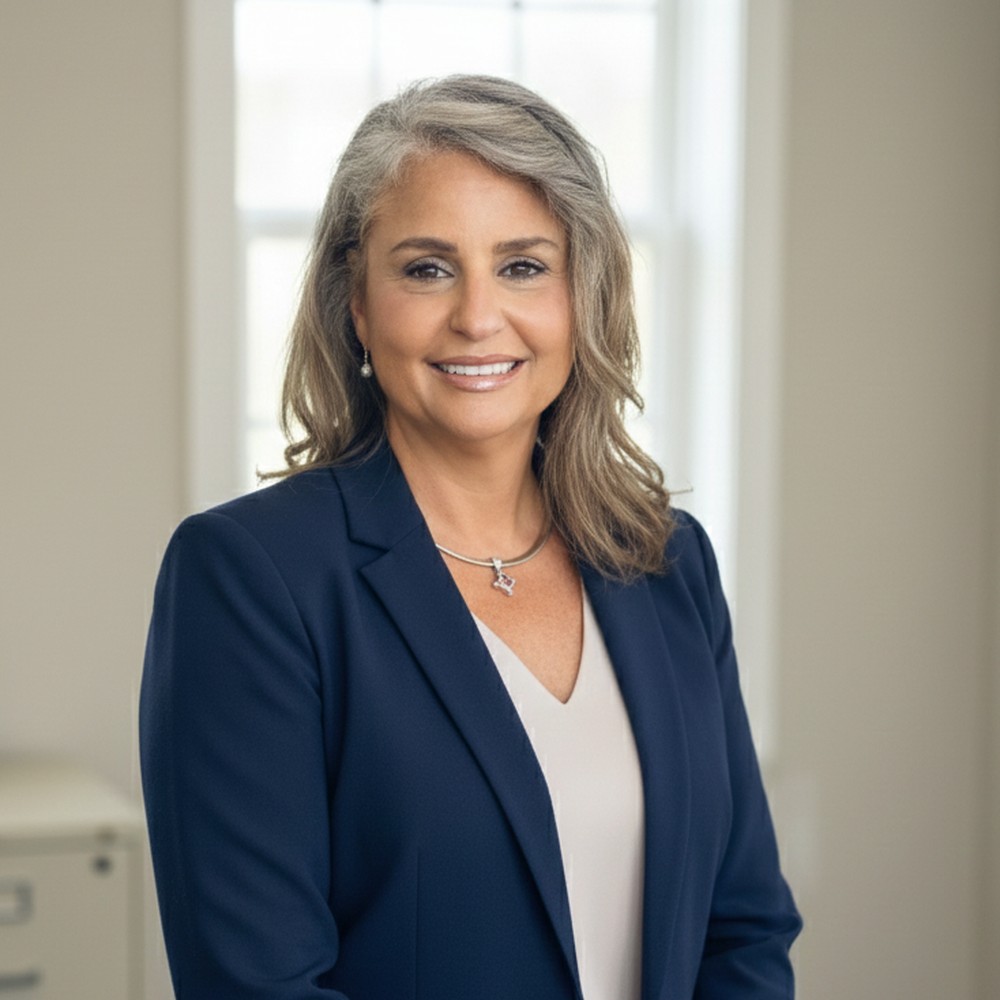
Toni Taylor Gozza — Mortgage Expert
NMLS #274323
I'm Toni Taylor Gozza, a Mortgage Expert with Interconnect Mortgage in Palm Beach Gardens, Florida, NMLS #274323. I help self-employed borrowers, first-time buyers, and people with complex income or substantial assets explore mortgage options that fit how their finances actually work. My approach is education first: I explain the choices in plain English so you can make an informed decision without being pushed into a loan you don't need. Credentials: NMLS #274323; Interconnect Mortgage, a DBA of Palm Beach Mortgage Group Inc., NMLS #373094 Expertise: Non-QM & creative financing, asset depletion, self-employed borrowers, first-time buyers
More about Toni →Ready to talk numbers?
Schedule a 15-minute call. We'll walk through your situation and show you what's actually possible — no pressure, no pitch.
Book a call

