Reverse Mortgage / Aging in Place
Aging in Place: How to Use Home Equity to Pay for Care Without Selling Your House
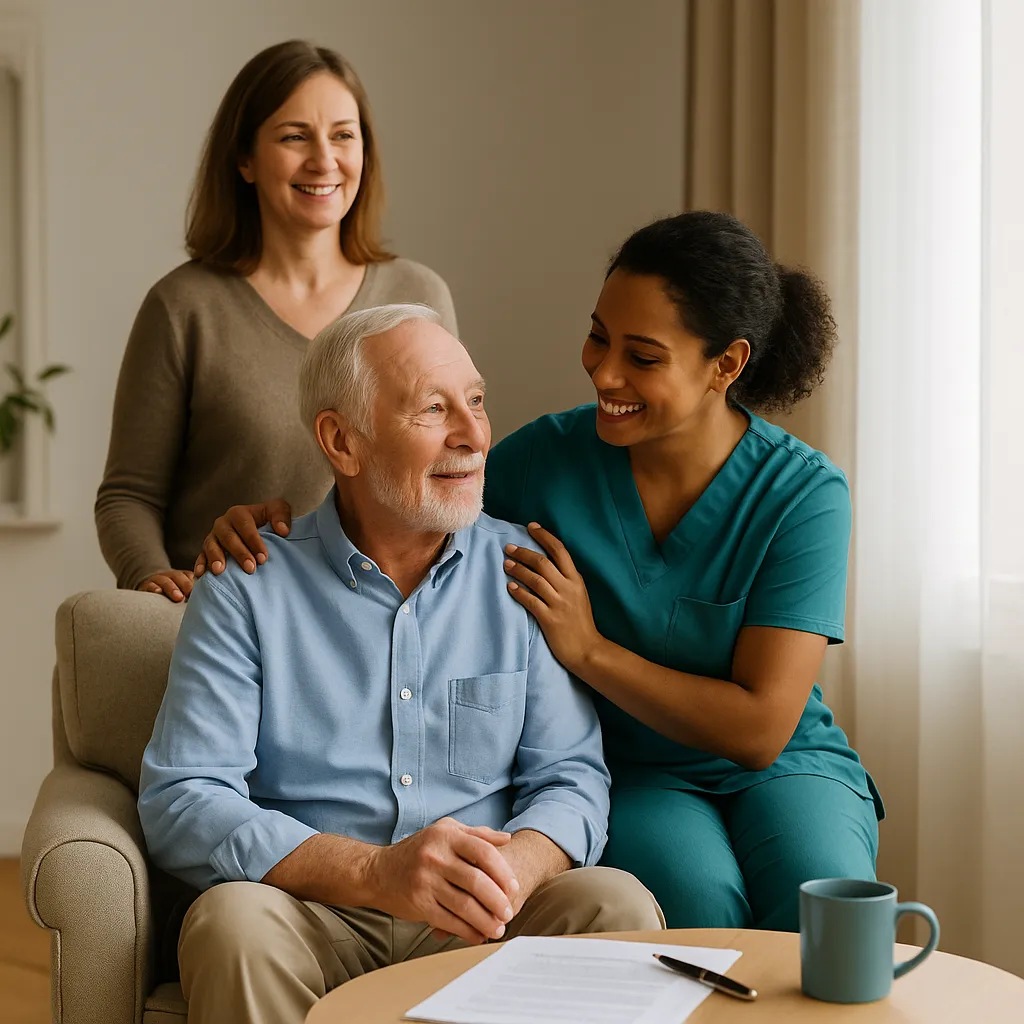
How can I pay for in-home care without selling the house?
Use the house to support the care. For homeowners 62 and older, a reverse mortgage lets them access part of their home's value without making monthly mortgage payments. That money can go straight toward caregivers or home health aides, safety upgrades like ramps and walk-in showers, respite care for family caregivers, or a rainy-day reserve for unexpected medical needs — a care fund built from the home itself, instead of draining savings or asking kids to shoulder the cost.
The challenge families face
Care at home isn’t cheap. Whether it’s hiring a part-time caregiver, installing a stair lift, or covering rising medical costs, most families eventually ask:
👉 “How do we pay for this without selling the house?”
The answer for many: use the house to support the care.
Turning equity into care
For homeowners 62+, a reverse mortgage lets them access part of their home’s value — without making monthly mortgage payments. That money can be directed straight toward:
- Caregivers or home health aides
- Home safety upgrades like ramps, walk-in showers, or railings
- Respite care, so family caregivers can take needed breaks
- A rainy-day reserve for unexpected medical needs
Instead of draining retirement savings or asking kids to shoulder the cost, home equity becomes a care fund built from the home itself.
Why it fits aging in place
Staying home isn’t just about comfort — it’s about control. By freeing up cash for care, seniors can:
- Keep routines, neighbors, and community ties
- Bring in help as needs change
- Make safety updates that allow independence longer
- Reduce stress for adult children balancing careers and caregiving
Things to keep in mind
Like any financial tool, a reverse mortgage isn’t for everyone. Families should weigh:
- Whether the home will remain the parent’s primary residence long-term
- The importance of preserving equity for inheritance vs. using it for quality of life now
- The responsibility to pay property taxes, insurance, and maintenance
A real-life scenario
James, 79, wanted to stay home but needed help after a fall. His daughter worried about the cost of full-time caregivers. With a reverse mortgage, they paid off his old mortgage and set up a line of credit for care services.
Result: James stayed in his home, and his daughter avoided draining her own savings to cover the bills.
The bottom line
If your family is asking “how do we afford care?”, your parents’ home may already hold the answer. Home equity can pay for caregivers, safety upgrades, and peace of mind — without selling the house.
👉 Book a free 15-minute call here: /book
Interconnect Mortgage, a DBA of Palm Beach Mortgage Group Inc., NMLS 373094
Check licensing at NMLS Consumer Access
Disclaimer: This is for educational purposes only and not a commitment to lend. All loans subject to credit approval, program guidelines, and property requirements. Reverse mortgage borrowers must pay property taxes, homeowners insurance, and maintain the home. Not all applicants will qualify. Consult with your financial, legal, and tax advisors before making decisions.
Custom HTML/CSS/JAVASCRIPT
Frequently asked questions
Can home equity pay for in-home care? +
Yes. For homeowners 62+, a reverse mortgage lets them access part of their home's value without monthly mortgage payments. That money can be directed straight toward caregivers, home health aides, safety upgrades, respite care, or a reserve for unexpected medical needs.
How does a reverse mortgage support aging in place? +
By freeing up cash for care, seniors can keep their routines, neighbors, and community ties, bring in help as needs change, and make safety updates that allow independence longer. It also reduces stress for adult children balancing careers and caregiving.
What should families consider before using home equity for care? +
Three things: whether the home will remain the parent's primary residence long-term, how to balance preserving equity for inheritance against quality of life now, and the ongoing responsibility to pay property taxes, insurance, and maintenance. Like any financial tool, a reverse mortgage isn't for everyone.
What are the alternatives to a reverse mortgage for funding care? +
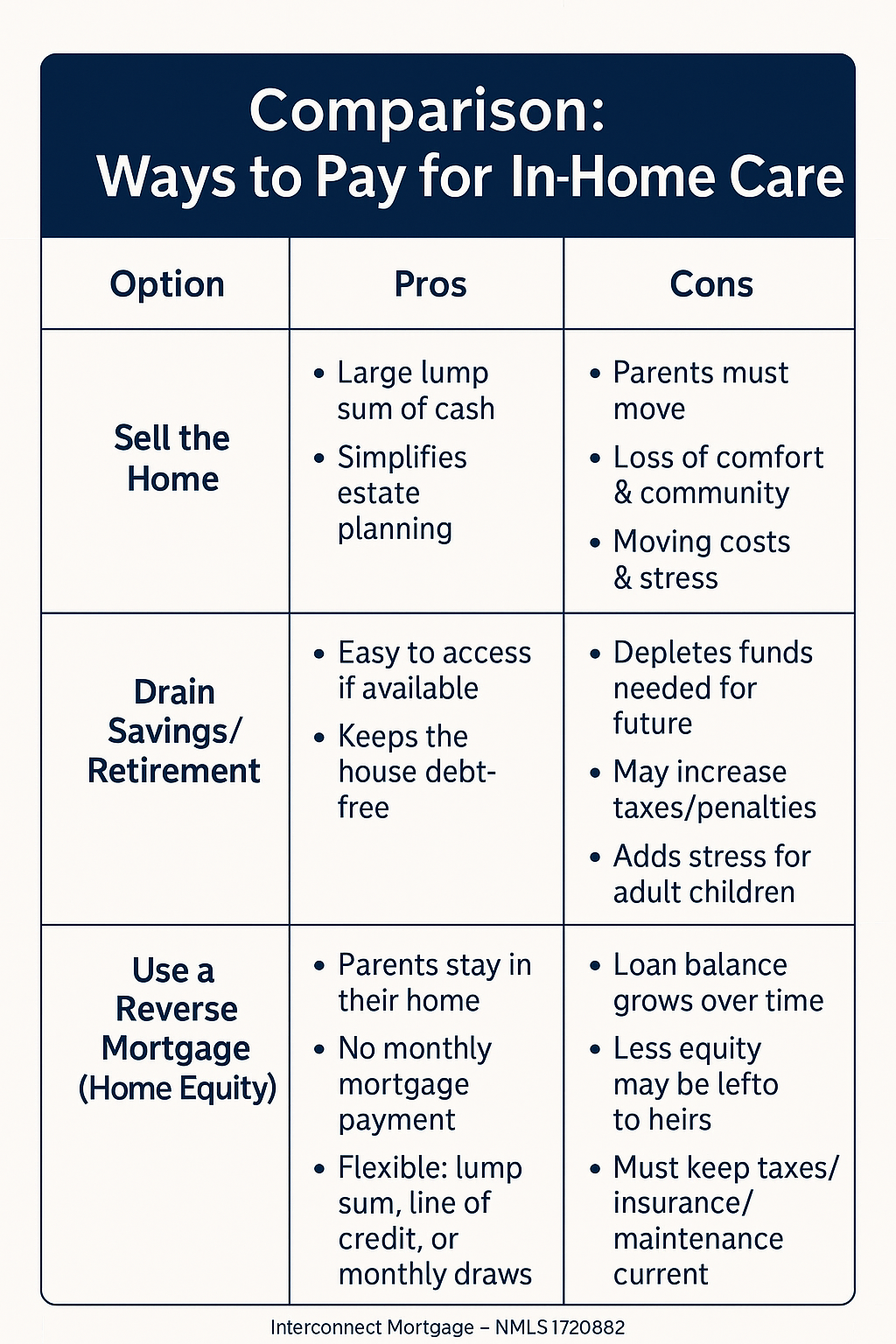
The main alternatives are selling the home or draining savings — each with its own tradeoffs. A reverse mortgage is the option that funds care while letting the senior stay in the home, as in the case of James, 79, whose family paid off his old mortgage and set up a line of credit for care services after a fall.
About the author
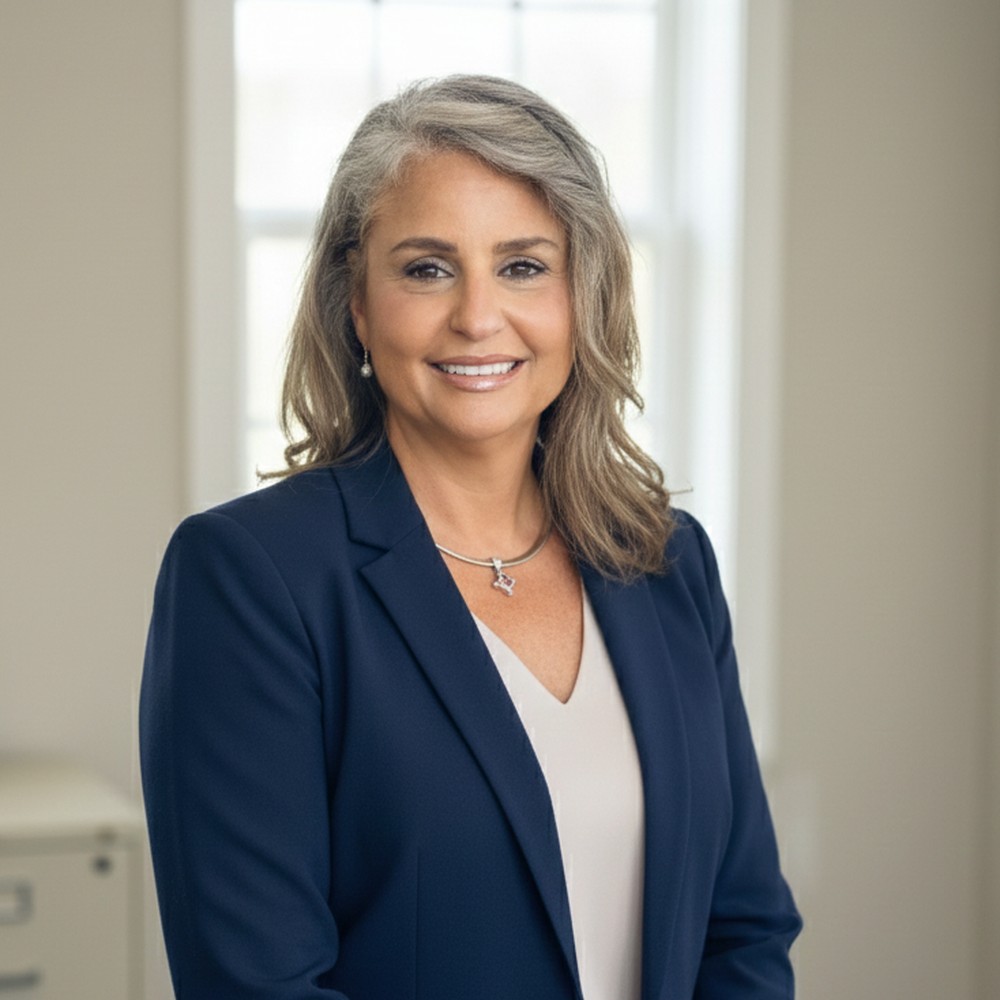
Toni Taylor Gozza — Mortgage Expert
NMLS #274323
I'm Toni Taylor Gozza, a Mortgage Expert with Interconnect Mortgage in Palm Beach Gardens, Florida, NMLS #274323. I help self-employed borrowers, first-time buyers, and people with complex income or substantial assets explore mortgage options that fit how their finances actually work. My approach is education first: I explain the choices in plain English so you can make an informed decision without being pushed into a loan you don't need. Credentials: NMLS #274323; Interconnect Mortgage, a DBA of Palm Beach Mortgage Group Inc., NMLS #373094 Expertise: Non-QM & creative financing, asset depletion, self-employed borrowers, first-time buyers
More about Toni →Ready to talk numbers?
Schedule a 15-minute call. We'll walk through your situation and show you what's actually possible — no pressure, no pitch.
Book a call

