First Time Home Buyers
How Real Estate Can Reduce Your Tax Liability
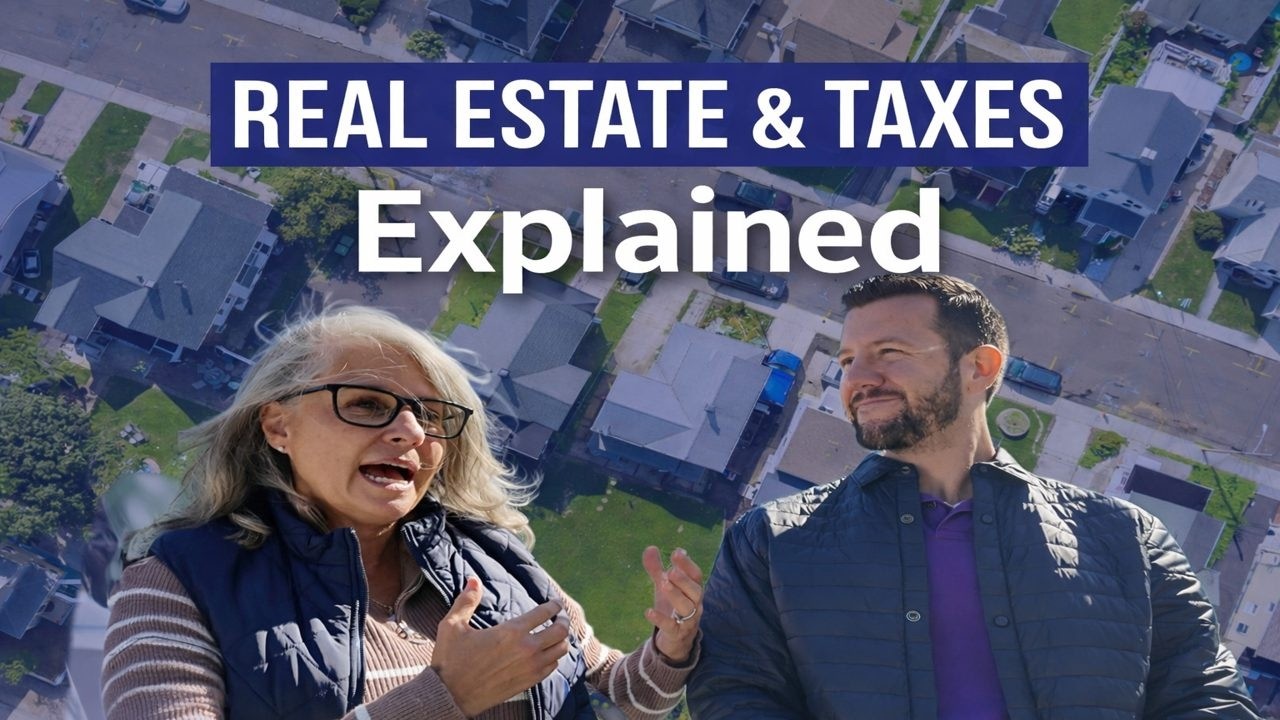
How can real estate reduce your tax liability?
The tax code treats real estate differently than many other assets. Rental property owners can report rental income, deduct eligible operating expenses, and track depreciation over time. Capital improvements — like a new roof or HVAC — increase your cost basis and reduce capital gains when you sell. And primary residences qualify for big exclusions: up to $250,000 in gains for single filers and $500,000 for married couples, if you've lived there two of the last five years.
Most people think of real estate as a place to live or an investment for the future.
What many don’t realize is that real estate can also play a major role in how much you pay in taxes.
That’s why I sat down with tax and accounting expert Alexander Goussis to talk about how homeowners and real estate investors often miss key tax advantages—and why documentation matters more than people think.
Why Real Estate Shows Up So Often in Tax Planning
The tax code treats real estate differently than many other assets.
According to the IRS, rental real estate is generally considered a passive activity, which allows income and expenses to be handled in specific ways on a tax return.
https://www.irs.gov/publications/p925
This is one reason real estate is so commonly used in long-term tax and wealth planning.
Rental Properties and Tax Benefits
When a primary residence becomes a rental, things change.
Rental properties allow owners to:
- Report rental income
- Deduct eligible operating expenses
- Track depreciation over time
The IRS outlines how rental income and expenses must be reported and why accuracy matters.
https://www.irs.gov/taxtopics/tc414
Failing to report rental income—even if a family member lives in the property—can cause issues later, especially when documentation is needed for financing, selling, or future planning.
Capital Improvements and Capital Gains
One of the most overlooked areas of tax planning is capital improvements.
Capital improvements can increase your cost basis, which directly affects how capital gains are calculated when you sell.
Examples often include:
- Roof replacement
- HVAC systems
- Major renovations
- Structural upgrades
The IRS explains how basis and capital improvements factor into capital gains calculations.
https://www.irs.gov/taxtopics/tc703
Many homeowners keep records for investment properties but forget to track improvements on their primary residence—even though those records can matter just as much later.
Primary Residence Capital Gains Exclusions
For primary residences, the tax rules are different.
If you meet IRS requirements:
- Single filers may exclude up to $250,000 in capital gains
- Married couples filing jointly may exclude up to $500,000
This generally applies if you’ve lived in the home for at least two of the last five years.
https://www.irs.gov/taxtopics/tc701
Keeping purchase documents, closing disclosures, and improvement records helps ensure those exclusions are applied correctly.
Why Documentation Matters More Than People Think
Good documentation helps with:
- Accurate tax reporting
- Capital gains calculations
- Mortgage qualification
- Estate and legacy planning
Even real estate agents often rely on this information when marketing a home, answering buyer questions, or positioning a property correctly.
Keeping records isn’t just about taxes—it supports better decisions across the board.
Watch the Full Conversation
In this video, we talk through:
- Why real estate plays such a big role in tax planning
- Rental properties and reporting requirements
- Capital improvements and cost basis
- Capital gains rules for homeowners and investors
Watch the full video here:
Where to Get Help With Tax Planning and IRS Questions
Every situation is different. Property type, usage, and long-term plans all matter.
If you have questions about how real estate affects your tax situation, it helps to talk with someone who understands both the rules and the strategy behind them.
Alexander Goussis
Tax Resolution & Tax Planning Specialist
Freedom Tax Relief Services
Phone: 516-708-6645
Email: alex@iraawaytoday.com
Final Thought
At Interconnect Mortgage, our goal is education and clarity.
Real estate, taxes, and financing are closely connected. Understanding how they work together helps you keep more of what you earn and make better long-term decisions.
If you want clarity on how real estate, taxes, and income affect your homeownership or investment plans, the first step is a conversation—not pressure.
👉 Schedule a conversation here:
/book
Disclaimer:
This content is for educational purposes only and not a commitment to lend.
Interconnect Mortgage, a DBA of Palm Beach Mortgage Group Inc., NMLS 373094.
Licensed in Florida.
Check licensing at NMLS Consumer Access.
Frequently asked questions
What tax benefits do rental properties offer? +
Rental property owners can report rental income, deduct eligible operating expenses, and track depreciation over time. The IRS generally treats rental real estate as a passive activity with specific reporting rules — and failing to report rental income, even from a family member, can cause issues when financing, selling, or planning later.
How do capital improvements affect capital gains taxes? +
Capital improvements — like roof replacements, HVAC systems, major renovations, and structural upgrades — increase your cost basis, which directly reduces the capital gains calculated when you sell. Many homeowners track improvements on investment properties but forget their primary residence, even though those records matter just as much.
How much capital gains can I exclude when selling my primary residence? +
If you meet IRS requirements, single filers may exclude up to $250,000 in capital gains and married couples filing jointly up to $500,000. This generally applies if you've lived in the home for at least two of the last five years.
Why does documentation matter so much for real estate taxes? +
Good records support accurate tax reporting, capital gains calculations, mortgage qualification, and estate planning. Keep purchase documents, closing disclosures, and improvement records — they help ensure exclusions are applied correctly and support better decisions across the board.

About the author
Toni Taylor Gozza — Mortgage Expert
NMLS #274323
I'm Toni Taylor Gozza, a Mortgage Expert with Interconnect Mortgage in Palm Beach Gardens, Florida, NMLS #274323. I help self-employed borrowers, first-time buyers, and people with complex income or substantial assets explore mortgage options that fit how their finances actually work. My approach is education first: I explain the choices in plain English so you can make an informed decision without being pushed into a loan you don't need. Credentials: NMLS #274323; Interconnect Mortgage, a DBA of Palm Beach Mortgage Group Inc., NMLS #373094 Expertise: Non-QM & creative financing, asset depletion, self-employed borrowers, first-time buyers
More about Toni →Ready to talk numbers?
Schedule a 15-minute call. We'll walk through your situation and show you what's actually possible — no pressure, no pitch.
Book a call